

Sub Topics: Cancer, Types of Cancer, Causes of Cancer, Symptoms of Cancer,...

What is Oncology
Definition of Oncology
Understanding oncology as the...
Gene Editing and Synthetic Biology are two interconnected fields revolutionizing modern medicine and biotechnology.
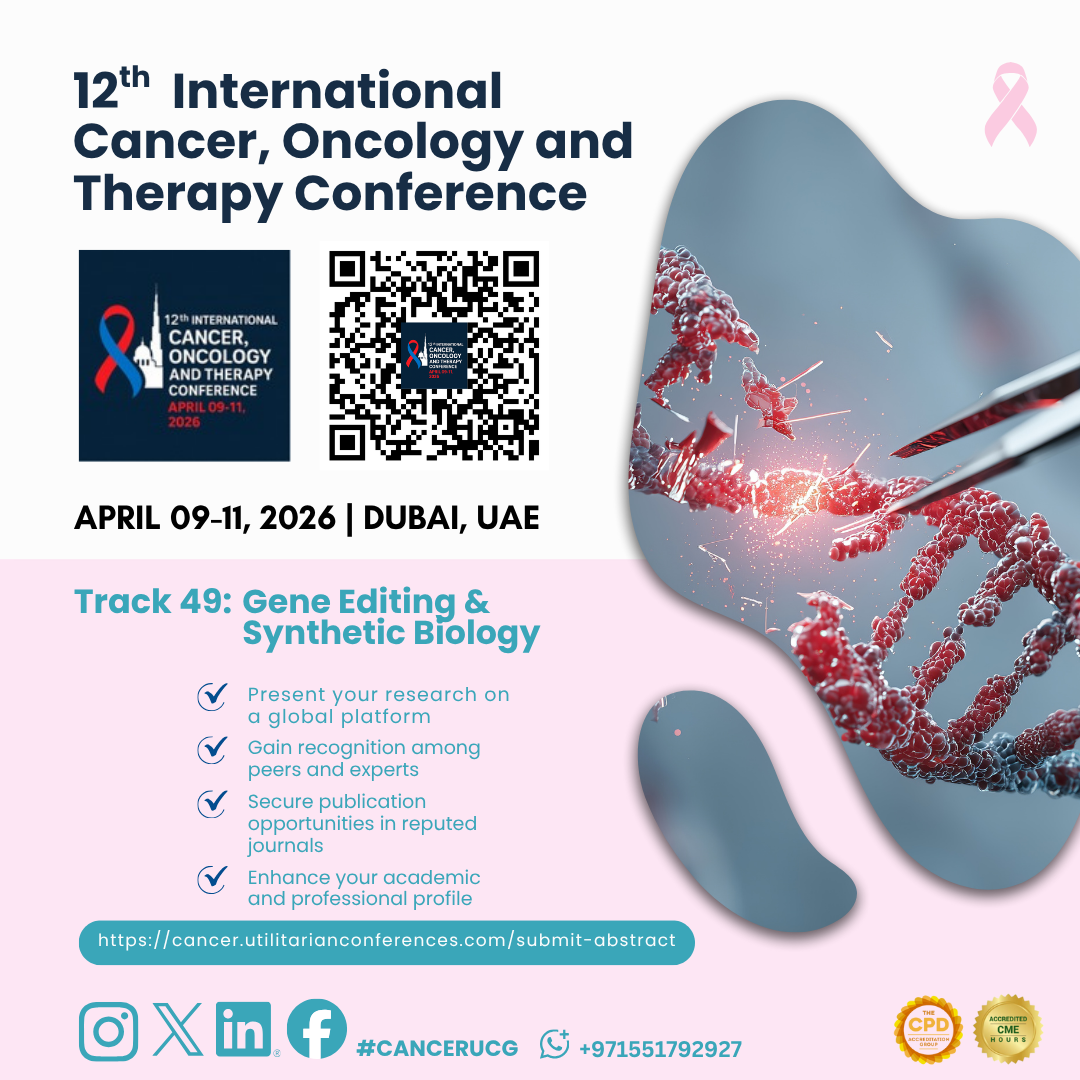
Gene Editing involves precisely altering DNA sequences within living organisms to correct genetic errors, add beneficial traits, or disable harmful genes.
The most famous tool is CRISPR-Cas9, which works like molecular scissors to cut and modify DNA at specific sites.
Synthetic Biology goes a step further — it focuses on designing and constructing new biological parts, systems, or even entire organisms that can perform specific functions, such as producing drugs, detecting cancer, or destroying tumor cells.
Together, they form the foundation of a new era of programmable biology, blending genetics, engineering, and computation.
Here are the main subtopics you can explore or use as conference session themes / blog sections:
1. CRISPR-Cas Systems
Mechanism of CRISPR gene editing
Advances beyond Cas9 (e.g., Cas12, Cas13 systems)
Off-target effects and accuracy improvements
2. Base Editing and Prime Editing
Newer, more precise tools that correct single DNA letters without cutting the double helix
Applications in hereditary cancer prevention and gene therapy
3. Synthetic Gene Circuits
Artificially designed DNA systems that control cellular behavior (like switches or sensors)
Used to detect cancer markers and trigger targeted therapeutic responses
4. CAR-T and Gene-Modified Cell Therapies
Using gene editing to engineer immune cells that recognize and destroy cancer cells
Next-gen synthetic biology enhancing CAR-T safety and specificity
5. Synthetic Vaccines and Oncolytic Viruses
Designing synthetic vaccines against cancer antigens
Engineering viruses that selectively infect and kill tumor cells
6. Genome Engineering for Cancer Modeling
Creating precise cancer models in animals or organoids for drug testing
Accelerating discovery of new cancer pathways and therapeutic targets
7. Ethical, Regulatory, and Safety Considerations
Bioethics of editing the human germline
Long-term monitoring and biosafety of synthetic organisms
Targeted Therapy Development
Gene editing allows researchers to modify or silence genes that drive tumor growth. This enables personalized cancer therapies tailored to individual genetic profiles.
Understanding Cancer Mechanisms
Scientists can model specific genetic mutations in lab-grown cells or organoids, revealing how cancers develop and spread.
New Therapeutic Platforms
Synthetic biology enables smart therapies — like engineered bacteria that deliver drugs directly to tumor sites, reducing side effects.
Next-Generation Immunotherapy
By editing immune cells, researchers can create customized cancer-fighting cells that recognize and eliminate tumors with unprecedented precision.
Faster Drug Discovery and Vaccine Design
Synthetic biology accelerates the creation of cancer vaccines, biosensors, and small molecules that were once impossible to design through traditional biology.
Precision Medicine Integration
Combining patient-specific genomic data with gene editing technologies helps in developing precision oncology treatments that improve outcomes while minimizing harm.
Gene Editing and Synthetic Biology are transforming the landscape of oncology by offering tools to:
Reprogram life at the molecular level
Understand cancer mechanisms in depth
Design targeted, efficient, and safer therapies
They represent the convergence of biology and engineering, driving a future where cancer may be detected earlier, treated more precisely, and even prevented through genetic innovation.